---
title: "The HR Leader’s Guide to Employee Engagement Surveys: Questions & Templates"
description: Learn how to conduct an effective employee engagement survey, design your questionnaire, and select the best template. Read our guide for expert tips.
image: https://blog.accessperks.com/hubfs/employee%20survey%20workers%20holding%20quote%20boxes.jpeg
---
[](https://www.accessperks.com/)
[ ](https://www.accessperks.com/) [ How We're Different ](https://www.accessperks.com/#slideshow) [ Product Demo ](https://www.accessperks.com/#video) [ Blog ](https://blog.accessperks.com/)
REQUEST INFO
### DISCOVER THE DIFFERENCE
Learn how employers nationwide are saving employees thousands on their everyday purchases with **America's largest employee discount network**.
Request a tour of the discounts nearest your office, in the neighborhoods where your employees live, and in the places where they travel.
**
The HR Leader’s Guide to Employee Engagement Surveys: Questions & Templates
13:39
# The HR Leader’s Guide to Employee Engagement Surveys: Questions & Templates
Posted by [Ryan Marvel](https://blog.accessperks.com/author/ryan-marvel) on Apr. 22, 2026
- [Tweet](https://twitter.com/share)
Employee engagement is more than just a buzzword—it's the key to a thriving, resilient organization. When employees feel heard, valued, and motivated, businesses see lower turnover and higher productivity. This guide gives you the practical tools and expert strategies you need to design meaningful surveys, collect actionable insights, and turn feedback into tangible improvements.
Global employee engagement declined to 21%, representing only the second drop in the past 12 years. According to Gallup's recent workplace reports, this widespread disengagement costs the global economy trillions of dollars in lost productivity.[1](https://blog.accessperks.com/employee-engagement-surveys-questions-templates#endnotes) For HR managers and C-suite executives, ignoring workforce sentiment is no longer an option. Implementing regular employee engagement surveys is the most effective way to measure morale, identify retention risks, and build a culture of high performance.
### Key Takeaways
- **Design with purpose**: Use a structured employee engagement questionnaire that balances quantitative ratings with qualitative, open-ended feedback.
- **Leverage frameworks**: An employee engagement survey template saves time and ensures you measure validated psychological drivers of workplace satisfaction.
- **Prioritize safety**: Master how to conduct an employee engagement survey by guaranteeing anonymity and clearly communicating the survey's purpose.
- **Invest in technology**: Utilize robust employee engagement survey tools to automate data collection and perform advanced sentiment analysis.
- **Take visible action**: Always share the results with your team and implement targeted action plans to prove that employee voices actually matter.
## Designing Your Employee Engagement Questionnaire
I think we can all agree about the importance of employee engagement surveys. The real question now is, how to do it right?
The questions you ask are the foundation of any successful feedback initiative. A poorly designed employee engagement questionnaire will give you vague data, while a strategic one pinpoints exact areas for improvement. To get an accurate picture of your organization's health, you must cover a broad spectrum of the employee experience. Before drafting your first set of questions, it is helpful to review the latest [employee engagement statistics and trends](https://blog.accessperks.com/employee-engagement-key-statistics-trends-in-the-2026-workplace) to understand which workplace factors are currently shifting for 2026.
### Key areas to cover in your employee engagement questionnaire:
- **Job satisfaction and role clarity**: Do employees know what is expected of them? Role ambiguity leads to frustration and burnout.
- **Management and leadership**: Employees who have weekly one-on-one meetings with their leaders are 1.5 times more likely to be highly engaged.[2](https://blog.accessperks.com/employee-engagement-surveys-questions-templates#endnotes) Use your questionnaire to assess the level of trust between staff and their direct supervisors.
- **Culture and values**: Alignment matters. Check if employees feel connected to the company's core mission.
- **Growth and development**: Support for learning new skills makes employees over four times more likely to be engaged.[3](https://blog.accessperks.com/employee-engagement-surveys-questions-templates#endnotes)
- **Work-life balance and well-being**: Economic instability and stress are top threats to workforce wellbeing.[4](https://blog.accessperks.com/employee-engagement-surveys-questions-templates#endnotes) Ask questions that gauge stress levels and flexibility needs.
[](https://hubspot-cta-redirect-na2-prod.s3.amazonaws.com/cta/redirect/263750/b3a53fd1-ac5c-494a-a965-d3cfea894727)
### Types of Questions for an Employee Engagement Questionnaire
Mixing question types ensures you get both quantitative data and qualitative context. For quantitative data, use Likert scale questions, which use a 1 to 5 rating system to establish benchmarks in attitudes, beliefs and behaviors. For qualitative data, open-ended questions allow employees to share nuanced frustrations or innovative ideas that a rigid scale might miss.
Crafting clear and unbiased questions is critical. Avoid leading questions that push the respondent toward a specific answer. Instead of asking, "How much do you enjoy our fantastic new wellness program?", ask, "How would you rate the impact of the new wellness program on your daily routine?" For more insights on gathering data, explore this [ultimate collection of employee engagement statistics](https://blog.accessdevelopment.com/index.php/2014/08/employee-engagement-loyalty-statistics-the-ultimate-collection).
### Sample Employee Engagement Survey Questions:
1. **Job Satisfaction**: On a scale of 1–5, how satisfied are you with your current role and responsibilities?
2. **Role Clarity**: Do you feel you have a clear understanding of what is expected from you in your position?
3. **Management**: How confident are you in your direct manager’s ability to lead and support you?
4. **Communication**: Do you feel comfortable providing feedback to your management team?
5. **Culture**: To what extent do you feel connected to our company’s mission and core values?
6. **Team Collaboration**: How would you rate the collaboration within your team?
7. **Growth Opportunities**: Do you believe there are sufficient opportunities for professional growth and development here?
8. **Recognition**: How often do you receive recognition for your work?
9. **Work-Life Balance**: Are you able to maintain a healthy balance between your work and personal life?
10. **Well-being**: How supported do you feel in managing work-related stress or mental health challenges?
## Utilizing an Employee Engagement Survey Template
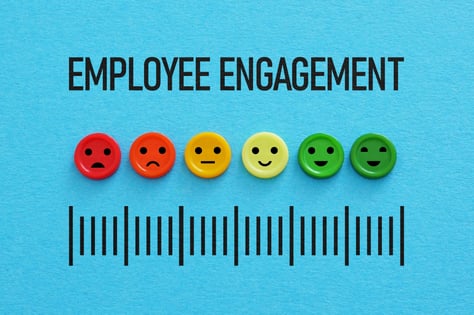Employee engagement survey templates provide a structured set of questions that help pinpoint your organization's specific strengths and weaknesses. This allows for targeted, data-driven actions to boost morale where it's needed most. For example, low scores in professional development could prompt new training programs or the introduction of creative [employee engagement ideas used by Fortune 500 companies](https://blog.accessperks.com/9-employee-engagement-ideas-fortune-500-companies-are-using-in-2026-clone) to revitalize the team spirit.
Many businesses report that using a survey template helps them:
1. **Save time**: Templates provide a ready-made structure, so you don’t have to start from scratch.
2. **Cover critical topics**: Professionally designed templates ensure you address all key engagement drivers.
3. **Understand and analyze results**: Consistent questions let you benchmark and compare results over time and against industry standards.
Using a consistent template over time also builds a repository of historical data. This is crucial for tracking progress, identifying trends, and measuring the long-term impact of your initiatives. It also lets you benchmark your performance against industry standards for a more contextualized perspective.
### Standardized vs. Customizable templates
When choosing an employee engagement survey template, you'll find two main types: standardized and customizable. Standardized templates use a fixed set of questions, allowing you to benchmark your results against industry averages or competitors. This external perspective helps you understand where your organization stands in the broader market and set realistic goals. However, their rigidity means they might not capture the unique aspects of your company culture or specific initiatives you want to measure.
On the other hand, customizable templates offer the flexibility to design surveys that address your organization's specific circumstances, such as a recent merger or a new work policy. This ensures the feedback is highly relevant and actionable, but you lose the ability to benchmark against external standards.
Often, the most effective strategy is a hybrid approach. This model combines a core set of standardized questions for benchmarking with a custom section for organization-specific topics. This allows you to track your performance against industry norms while gathering targeted feedback on timely issues, providing a comprehensive view of employee sentiment. By blending both methods, you can gain valuable, contextualized insights that are both comparable to external standards and directly relevant to your internal strategic priorities, creating a robust foundation for your action plan.
## How to Conduct an Employee Engagement Survey
Knowing the right questions is only half the battle; execution determines your participation rate. Understanding how to conduct an employee engagement survey properly ensures employees feel safe providing honest, unfiltered feedback.
### Best Practices for Conducting Employee Engagement Surveys
Before you launch a survey, it's crucial to define your objectives. Are you measuring overall sentiment, or are you investigating a specific issue like high turnover in one department? A clear goal helps you ask the right questions and gather actionable data.
Next, develop a communication plan to boost participation:
- **Explain the "Why"**: Be transparent about why you're conducting the survey and how the feedback will be used to make improvements. When employees see the purpose, they're more likely to provide thoughtful answers.
- **Guarantee confidentiality**: Assure staff that their responses will be anonymous. This creates a safe space for honest, unfiltered feedback, which is essential for understanding the true employee experience.
- **Set a timeline**: Provide clear start and end dates to create a sense of urgency, and send reminders to encourage participation.
Once the survey closes, analyze the results to identify key trends across different demographics like department, location, or tenure. This will give you a deeper understanding of your workplace.
[](https://hubspot-cta-redirect-na2-prod.s3.amazonaws.com/cta/redirect/263750/64176750-2aff-47e6-9da9-3b3efe53f298)
## Selecting Employee Engagement Survey Tools
Manually collecting and analyzing survey data is not only slow and tedious but also prone to errors that can skew your results. This is where dedicated employee engagement survey tools can make a significant difference.
These platforms streamline the entire feedback process, from automating survey distribution to securely compiling responses. If you are currently in the procurement phase, it is helpful to review a guide on [how to choose the best employee engagement software](https://blog.accessperks.com/how-to-choose-the-best-employee-engagement-software) to ensure the platform meets your specific data security and reporting needs.
Modern survey tools also offer powerful analytical features. Many use AI to perform sentiment analysis on written comments, quickly identifying common themes and underlying emotions.[5](https://blog.accessperks.com/employee-engagement-surveys-questions-templates#endnotes) This provides deeper, more nuanced insights than what can be achieved through manual review alone, giving you a clearer picture of employee sentiment.
### Integrating Employee Engagement Survey Tools
The right employee engagement survey tools should integrate seamlessly with your existing HR Information System (HRIS). This integration allows you to cross-reference engagement scores with performance metrics and turnover rates.
When evaluating platforms, prioritize user experience. The interface should be mobile-friendly, allowing deskless or remote workers to complete the survey easily from their smartphones. Robust reporting dashboards are also essential for sharing high-level summaries with the C-suite.
However, running employee engagement surveys is only the start. The real value comes from creating and executing a solid action plan that addresses employee feedback. This is how you foster a culture of continuous improvement.
## Acting on Feedback: From Insights to Action
Data without action breeds cynicism. If employees take the time to share their thoughts, they expect leadership to respond. Developing action plans based on survey findings is the most critical phase of the entire process.
Communicate results and action plans to employees transparently. You do not need to solve every problem immediately, but you must acknowledge the feedback. Highlight two or three key areas of focus and explain the specific steps the company will take to address them.
Monitor progress and commit to continuous improvement. One way to do this is through forming cross-functional committees to tackle specific engagement issues, giving employees a voice in the solutions.
## Advanced Strategies for Employee Engagement Surveys
Annual surveys provide a helpful baseline, but employee sentiment shifts constantly. Transitioning to pulse surveys—shorter, more frequent check-ins allows HR leaders to track morale in real-time.
Engagement data becomes significantly more powerful when you connect it to the numbers executives already care about. Try correlating your survey results with customer satisfaction scores, sales performance, or safety records. When you can show that your most engaged teams are also your most productive and profitable ones, HR stops being seen as overhead and starts being seen as a driver of business results. This can help you gain valuable, ongoing buy-in from executives for future HR initiatives.
## Learn How to Engage Your Unique Workforce
Employee engagement surveys are more than just a diagnostic tool—they are the foundation for building a culture of trust, inclusivity, and ongoing improvement. By designing thoughtful questionnaires, leveraging robust survey tools, and acting on insights, organizations empower employees and drive performance at every level. Remember, ongoing engagement is linked not only to greater employee satisfaction but also to enhanced customer experiences and business outcomes.
Ready to boost engagement in your organization or need help getting started? Surveys tell you where the problems are. Access Perks helps you solve one of the most universal ones: employees who don't feel valued or supported in their daily lives. Our employee discount program (the largest private discount network in the nation) gives your workforce meaningful, tangible benefits across dining, retail, travel, and entertainment. [Connect with us today](https://www.accessdevelopment.com/connect-with-us/) for expert support and solutions.
For a comprehensive look at building a long-term strategy, refer to [The Ultimate Guide to Employee Engagement (2026 Edition)](https://blog.accessperks.com/employee-engagement-guide).
### Endnotes / Resources
1. [Gallup. State of the Global Workplace 2026.](https://www.gallup.com/workplace/349484/state-of-the-global-workplace.aspx)
2. [Workhuman. 2024 Workhuman iQ Report Executive Summary](https://www.workhuman.com/resources/reports-guides/2024-workhuman-iq-report-executive-summary/).
3. [Workhuman. The Human-Centered Workplace: Building Organizational Cultures That Thrive.](https://www.workhuman.com/resources/reports-guides/the-human-centric-workplace-gallup-report/)
4. [American Psychological Association. Highlights from the 2025 Work in America™ survey.](https://www.apa.org/pubs/reports/work-in-america/2025)
5. [Vonage. What Is Sentiment Analysis? How Deeper Insight Leads to Customer Satisfaction.](https://www.vonage.com/resources/articles/sentiment-analysis/)
[](https://hubspot-cta-redirect-na2-prod.s3.amazonaws.com/cta/redirect/263750/5353aad5-c3c4-412b-a693-a6945d7bd816)
Topics: [employee engagement](https://blog.accessperks.com/topic/employee-engagement), [employee retention](https://blog.accessperks.com/topic/employee-retention), [generation z](https://blog.accessperks.com/topic/generation-z), [generational gap](https://blog.accessperks.com/topic/generational-gap), [employee recognition](https://blog.accessperks.com/topic/employee-recognition), [recognition software](https://blog.accessperks.com/topic/recognition-software)

### Written by [Ryan Marvel](https://blog.accessperks.com/author/ryan-marvel)
[ ](https://www.linkedin.com/in/ryan-marvel-2aa2426)
Ryan Marvel is Vice President of New Product Development at Access. With nearly 20 years experience in business solutions, Ryan innovates new products that help businesses create meaningful connections with their audiences. His work is rooted in the belief that the right benefits and tools don't just solve problems—they build loyalty that lasts.
### Blog Sign Up
[](https://hubspot-cta-redirect-na2-prod.s3.amazonaws.com/cta/redirect/263750/9856683d-0c1d-437f-8476-dbb2a50fb252)
### Most Recent Posts
[](https://hubspot-cta-redirect-na2-prod.s3.amazonaws.com/cta/redirect/263750/c67363b0-84f7-4927-84d4-4701b4ff8c89)
### Trending Posts
[ ](https://blog.accessperks.com/employee-engagement-benefits-statistics-the-ultimate-collection)
[Employee Engagement & Benefits Statistics You Need to Know in 2025: The Ultimate Collection](https://blog.accessperks.com/employee-engagement-benefits-statistics-the-ultimate-collection)
[ ](https://blog.accessperks.com/why-employee-discount-programs-work-an-hr-professional-speaks)
[Why Employee Discount Programs Work: From One HR Professional to Another](https://blog.accessperks.com/why-employee-discount-programs-work-an-hr-professional-speaks)
[ ](https://blog.accessperks.com/access-perks-introduces-disneyland-resort-for-employees)
[My Oh My, What a Wonderful Deal from Disneyland Resort](https://blog.accessperks.com/access-perks-introduces-disneyland-resort-for-employees)
[
 ](https://www.linkedin.com/showcase/access-perks/)
© 2026 Access Development. Access is an Equal Opportunity Employer. All rights reserved.
[Privacy Policy](https://www.accessdevelopment.com/privacy-policy) [Trademark & Copyright](https://www.accessdevelopment.com/trademark-and-copyright) [Consent Preferences](https://www.accessdevelopment.com/#)
```json
{
"@context" : "https://schema.org",
"@type" : "BlogPosting",
"author" : {
"@type" : "Person",
"name" : "Ryan Marvel",
"url" : "https://blog.accessperks.com/author/ryan-marvel"
},
"dateModified" : "2026-06-15T19:39:50.388Z",
"datePublished" : "2026-04-22T13:00:01.000Z",
"headline" : "The HR Leader’s Guide to Employee Engagement Surveys: Questions & Templates",
"image" : [ "https://blog.accessperks.com/hubfs/employee%20survey%20workers%20holding%20quote%20boxes.jpeg" ],
"mainEntityOfPage" : {
"@id" : "https://blog.accessperks.com/employee-engagement-surveys-questions-templates",
"@type" : "WebPage"
},
"publisher" : {
"@type" : "Organization",
"logo" : {
"@type" : "ImageObject",
"url" : "https://blog.accessperks.com/hubfs/accessPerks-1.png"
},
"name" : "Access Development"
}
}
```
```json
{
"@context" : "http://schema.org",
"@type" : "BlogPosting",
"author" : {
"@type" : "Person",
"name" : "Ryan Marvel"
},
"dateModified" : "June 15, 2026, 7:39:50 PM",
"datePublished" : "2026-04-22 13:00:01",
"description" : "Learn how to conduct an effective employee engagement survey, design your questionnaire, and select the best template. Read our guide for expert tips.",
"headline" : "The HR Leader’s Guide to Employee Engagement Surveys: Questions & Templates",
"image" : {
"@type" : "ImageObject",
"url" : "https://263750.fs1.hubspotusercontent-na2.net/hubfs/263750/employee%20survey%20workers%20holding%20quote%20boxes.jpeg"
},
"publisher" : {
"@type" : "Organization",
"logo" : {
"@type" : "ImageObject",
"url" : "https://cdn2.hubspot.net/hubfs/263750/accessPerks-1.png"
},
"name" : "Access Perks"
}
}
```
```json
{
"@context" : "http://schema.org",
"@type" : "Organization",
"address" : {
"@type" : "PostalAddress",
"addressCountry" : "USA",
"addressLocality" : "Salt Lake City",
"addressRegion" : "Utah",
"postalCode" : "84119",
"streetAddress" : "1012 Beardsley Place "
},
"alternateName" : "Access Perks",
"areaServed" : {
"@type" : "GeoCircle",
"geoMidpoint" : {
"@type" : "GeoCoordinates",
"latitude" : "+40.718147",
"longitude" : "-111.9223077"
},
"geoRadius" : "150 km"
},
"description" : "Looking for employee discount programs? Learn why Access Perks -- America's largest employee discount network -- is rated #1 by employers nationwide.",
"email" : "info@accessdevelopment.com",
"image" : "https://cdn2.hubspot.net/hubfs/263750/accessPerks.svg",
"logo" : "https://cdn2.hubspot.net/hubfs/263750/accessPerks.svg",
"mainEntityOfPage" : {
"@id" : "https://blog.accessperks.com/employee-engagement-surveys-questions-templates",
"@type" : "WebPage",
"description" : "Learn how to conduct an effective employee engagement survey, design your questionnaire, and select the best template. Read our guide for expert tips."
},
"naics" : "518210",
"name" : "Access Perks",
"sameAs" : [ "https://www.facebook.com/AccessPerks/", "https://twitter.com/access_perks", "https://www.bbb.org/us/ut/salt-lake-city/profile/travel-club/access-development-corporation-1166-86010001", "https://www.linkedin.com/showcase/access-perks/" ],
"telephone" : "1-800-331-8867",
"url" : "https://www.accessperks.com"
}
```