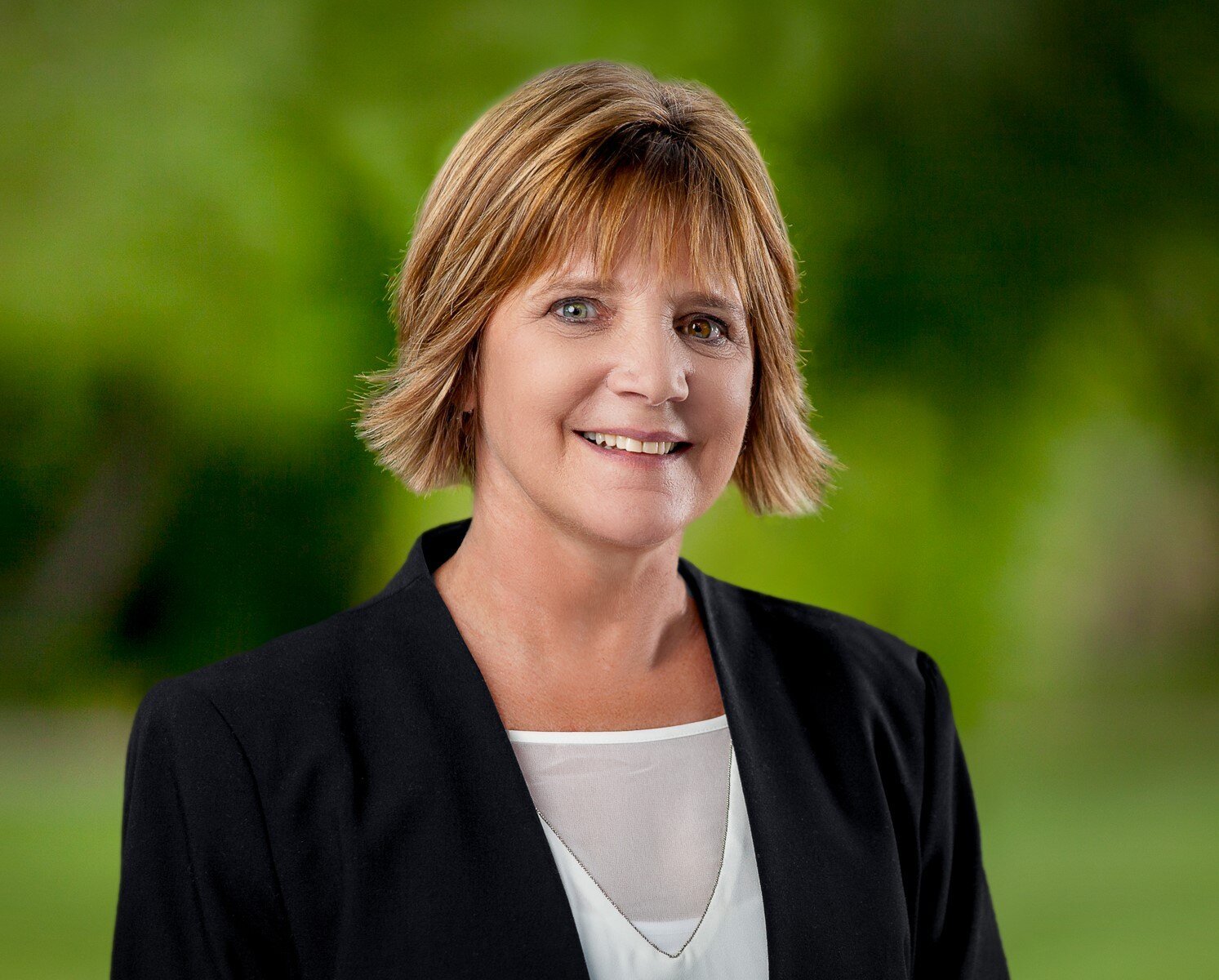

Lisa Oyler has served as HR director for Access Perks / Access Development for more than a decade. In all, she has over 30 years of experience in the human resources field. Her time with Access Perks has made her a leading authority on employee discount programs, especially on how employee benefits impact employee retention and engagement. From June 16–19, Oyler attended the SHRM Annual Conference & Expo in Orlando, Florida.
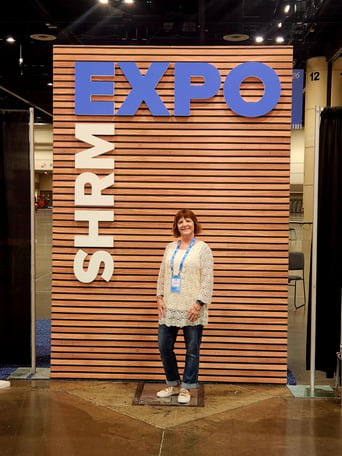 I just got back from Orlando with a full notebook, a killer step count, and a lot to think about.
The SHRM (Society for Human Resource Management) Conference is always a bit of a double edged sword. This year was one part overwhelming to two parts energizing. It was exactly what I needed after a year that, let's be honest, has not been easy for HR. Between a cooling labor market, mounting AI anxiety in the workforce, an increasingly complicated legal landscape, and employees who are still, quietly, stressed about money, a lot of us have walked into the office feeling like we're managing every direction at once. Being surrounded by nearly 20,000 HR professionals who are living exactly the same experience? That's its own kind of medicine.
Here are the lessons I brought home this year:
Key SHRM 2026 Conference Takeaways
- The future of HR is being built right now, in the small daily interactions where employee experience actually lives.
- Benefits aren't a once-a-year conversation. They're felt daily, and employees need to know they're covered year-round, not just at open enrollment.
- Experience and engagement aren't the same thing: experience is how someone feels in a moment, engagement is the running temperature of all those moments combined.
- HR's credibility with the C-suite is at risk, and the profession must learn to speak the language of business outcomes, not just people programs.
- AI doesn't just change what work looks like, it introduces a new and more demanding cognitive load that employees need support navigating.
- The goal isn't to offer more benefits, it's to offer benefits that make a real impact on employees' daily lives.
- Culture is the sum of how people treat each other when no one is forcing them to. HR sets the tone for that every single day.
- Employee recognition is no longer a nice-to-have: the connection between recognition, culture, and retention has never been more directly tied to business performance.

HR Trends 2026: The Employee Engagement Trends That Will Shape the Future
If there was one overarching message at SHRM26, it was this: there are massive changes coming to the HR profession. The kind that will fundamentally reshape how work gets done, who does it, and what HR's role looks like on the other side.
However, here's what I've learned after thirty years of watching the profession evolve: the long-term change is built in the short term, in the daily interactions where employee experience actually lives. The future of HR isn't going to arrive all at once. It's being built today, in ordinary moments that mostly go unnoticed.
SHRM26 covered the full landscape of what HR is expected to know and lead on. I tried to learn broad, which meant more than a few sprints from one end of the convention center to the other to catch the sessions I wanted. This year's sessions ran the gamut:
- AI adoption and governance is growing more complex, and HR is now expected to lead workforce strategy through the shift, not just respond to it after the fact.
- AI's impact on cognitive load is a less-discussed reality: while AI streamlines some tasks, it draws on a more demanding set of cognitive skills and often creates new decisions faster than it eliminates old ones.
- Compliance and the shifting legal landscape is accelerating on multiple fronts, from AI regulation in hiring to pay equity and employment law updates that vary state by state.1
- Employee financial wellness has crossed a threshold and it's no longer a secondary benefit but a core component of organizational resilience and workforce sustainability.2
- Benefits quality over quantity is the new standard, as costs and regulatory pressure mount and employees increasingly expect benefits that function in their daily lives.
- Leadership development remains as urgent as ever, because technology and strategy only go as far as the managers implementing them.
- Burnout, wellbeing, and mental health have direct impact on retention, productivity, and organizational performance.3
- HR's reputation and strategic relevance is genuinely at stake, as C-suite leaders increasingly expect HR to speak the language of business outcomes, not just people programs.
- Workforce demographics, caregiving, and retirement readiness are quietly reshaping organizations as more employees approach retirement timelines, creating real succession and knowledge-transfer urgency.
- Culture as daily practice is built in the small interactions that happen when no one's grading you on them.
I'll dig into a few of the ones that hit hardest in the next section. But the thread connecting all of them is that none of it works without the human foundation underneath it, and the latest data on where engagement stands in 2026, along with what's shifting across the workplace, makes it clear just how much that foundation is being tested right now.
My SHRM 2026 Conference Takeaways
Every SHRM conference has a handful of moments you carry out of the convention center and into the next year. These are the five quotes that stood out most this time, and what I'm planning to do differently because of them.
Be More Accessible, Humanize Yourself, and Inspire Calm
"People are yearning for real-life experience. People want human interactions."
Sinek spoke of broader social trends (the boom in travel, people stepping away from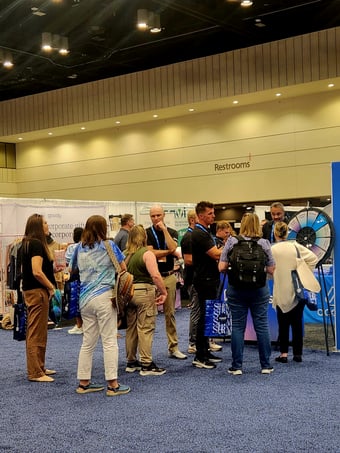 screens) that show how the more automated our work environments become, the more employees will crave genuine human connection. Experience is bigger than engagement. Experience is how someone feels in a single moment or interaction. Engagement is the slower, aggregate read on all those moments over time.4
Want more engagement? Work on the daily employee experience. What I'm taking from that is a shift in how I think about my own availability. It's easy to measure leadership by output and achievement. I want to measure mine this year by availability instead: whether the people on my team actually feel like I'm accessible, and whether they know they're known as individuals rather than line items on a headcount report.
Benefits Impact Everyone Daily. Go For Quality over Quantity.
"Financial wellness is no longer a secondary benefit; it is a core component of organizational resilience and workforce sustainability."
SHRM's 2026 Employee Benefits Survey, unveiled at SHRM26, shows that employee experience has emerged as the top strategic HR priority for the year ahead. Benefits will be a direct driver of business agility, engagement, and growth.Traditional benefits of healthcare and retirement are top of mind, and the benefits conversation is as basic as it gets: am I covered, can I afford this prescription, what happens if something goes wrong this weekend?6 These conversations, held all throughout the year, help employees feel seen and cared for, which doesn't happen if education happens only at open enrollment.
The goal is not to offer more benefits, it’s to offer benefits with real impact on daily life and communicate the value regularly. At Access Perks, we know how much lifestyle discounts on everyday purchases and big experiences like travel can ease the burden of financial stress. Real stories from real employees tell of their improved quality of life from being able to stretch their paychecks further.
Change. Be Open.
"We've got to become experts on work itself. We have to see what's coming next and get the business ready for it."
Taylor didn't soften the profession's reputation problem in his keynote. In an informal poll he took of 92 corporate leaders, 60% said they only tolerated HR, 30% said they thought it had little value, and just 10% said they loved it.7 HR has always been the bridge between employee needs and business needs. For the future of the entire profession of HR, professionals will need to embrace added responsibilities beyond people and into work itself: how it's structured, who or what performs it, and the ROI each employee actually delivers.
HR professionals are already expected to be the company expert in many different subjects. However, as the role of HR evolves, it’s important to add without subtracting. Even as we become experts in the needs of the business, we can’t lose sight of the needs of the employees, which has long been the heart of HUMAN resources.
AI Is Here, and Human Judgment Is More Important Than Ever
"At the end of the day, if you don't understand humans, you don't understand business."
With so many sessions about AI detailing how-tos and best use cases, the reminder to keep humans at the forefront of the AI revolution by Simon Sinek was very needed. Sinek pushed back firmly on narratives suggesting AI will replace large swaths of the workforce, calling that framing "short-term thinking" that breeds unnecessary anxiety and makes adoption harder, not easier.8 AI anxiety isn’t the only problem. AI use requires a different skill set, one with a cognitive load that can be much more taxing than the skills it replaces. Supporting workers through the transition is an essential part of building a team that delivers results.
AI may be new, but the task of implementing new technology isn't new territory for HR. What's different this round is the scale of anxiety attached to it, and that's a people problem before it's a technology problem. My plan is to make sure our own AI guidelines are actually communicated, not just written — and to keep checking in on how our team feels about the changes, not just whether they're using the tools correctly.
Be Custodians of Culture
"Human resources isn't just about spreadsheets and policies. It's about human potential."
Winfrey closed the conference by calling HR professionals "masters of human potential." HR is responsible for identifying strengths, developing talent, and helping people become the best version of themselves.8 One phrase echoed throughout many sessions: you can’t run business from a spreadsheet. Through her stories, she demonstrated just how much people want to feel seen and valued. Cultivating a culture of recognition will be more important in the year to come.
One idea stuck with me: that culture is the sum of how people treat each other when no one is forcing them to (Steve Gilliland). Oprah pointed out that the most important work of HR often goes unnoticed, but that every interaction, the very energy you bring into conversations, all work together to shape culture. During a time when every interaction, every decision gives others the opportunity to either feel trusted and valued or doubted and invisible, I’m focusing this year on the energy I bring to work every day. After all, change is constant, energy is not (Drew Fockler).
Employee Recognition: Exciting Employee Benefits Trends at Access Perks
Hopefully you made it by the Access Perks booth at the expo, because we brought something new to Orlando this year.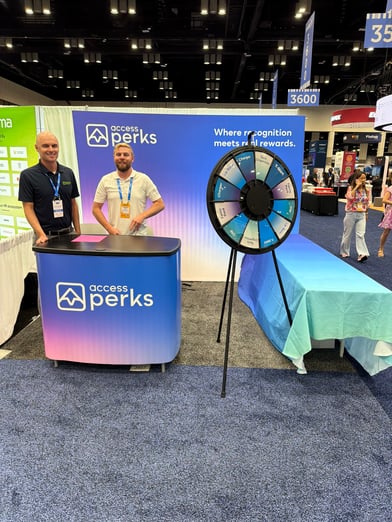
We introduced Access Perks Ascend, our new employee recognition platform. Our very own Ryan Marvel, Brandon Hess and Jordan Maier were there, meeting with record numbers of awesome HR professionals. You know what we learned? So many businesses are just now realizing the power of a well-done employee recognition program for inspiring engagement and retention.
Access Perks has 40+ years building the largest and deepest private discount network in the U.S. On their own, lifestyle benefits are a popular benefit. Combined with a formal recognition program, the impact compounds. Given everything about employee engagement trends discussed at SHRM26 about the connection between recognition, culture, and retention, the timing feels right.
If you missed us on the floor, there’s an easy way to catch up. Schedule a demo to see a walkthrough of Ascend and our broader employee discount and benefits programs. Or, if you missed out on our fun HR-themed gear (new designs this year!) head to our HR merch store.
SHRM26 was a reminder that the profession is stronger when we share what we're learning. What did you take away from this year? Drop a comment. Let’s keep the conversation going.

Resources / Endnotes
-
- SHRM. 2026 Top Five Workplace Issues.
- SHRM. Managers: The Bridge to Better Employee Financial Wellness.
- SHRM Foundation. Workplace Mental Health.
- SHRM. The Real AI Challenge Isn't Adoption — It's Redesigning Work.
- SHRM. SHRM and Raymond James Research Reveals Why Financial Wellness Must Be a Business Priority.
- SHRM. SHRM Research Reveals the Strategic Benefits Shifts Reshaping the Workplace in 2026.
- SHRM. The HR Revolution: From Experts on People to Experts on All Things Work.
- SHRM. Oprah to HR: 'You're the Custodians of Culture.